Free Shipping on $50 Orders

Bobby Douglas
Trailblazing Wrestler, Coach & Headgear Inventor
1/6/20263 min read
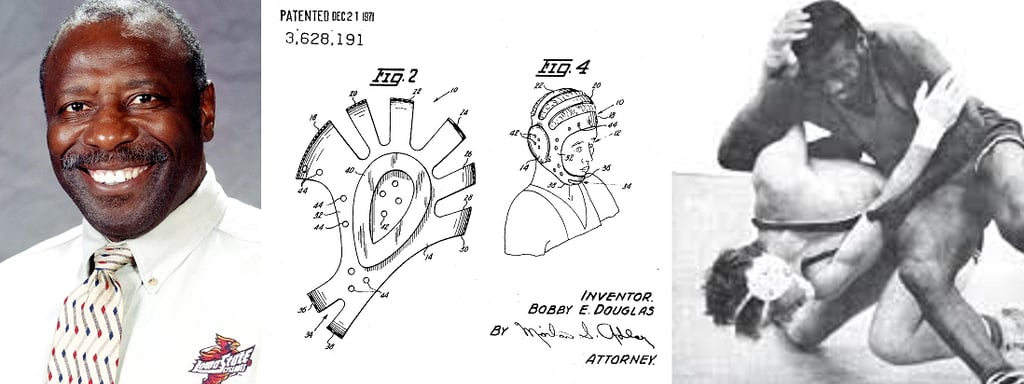
Robert Edward Douglas, born on March 30, 1942, in Bridgeport, Ohio, rose from humble beginnings to become a groundbreaking force in American wrestling. As an accomplished athlete, coach, and inventor, Douglas shattered barriers as one of the first African American Olympians and coaches in the sport, while his innovative contributions to protective gear addressed longstanding safety concerns. His career exemplified resilience, excellence, and a commitment to advancing wrestling for future generations.
Early Life and Athletic Prowess
Growing up in a working-class family, Douglas discovered wrestling at Bridgeport High School, where he honed his skills and developed a passion for the sport. He attended West Liberty State College before transferring to Oklahoma State University, where he wrestled under coach Myron Roderick. At OSU, Douglas compiled an impressive collegiate record of 72–2, winning Big Eight Conference championships and earning All-American honors. His international freestyle career was equally stellar: he represented the United States at the 1964 Tokyo Olympics (finishing fourth) and the 1968 Mexico City Olympics (as team captain, placing fifth). Douglas also competed in multiple World Championships and Pan American Games, amassing a freestyle record of approximately 303–17. His technical mastery and competitive spirit made him a standout in an era when wrestling was gaining global prominence.
Distinguished Coaching Career (1970s–2000s)
After retiring from competition, Douglas transitioned to coaching, breaking racial barriers as one of the first African American head coaches in NCAA wrestling. He began at Arizona State University in 1973, leading the Sun Devils to the 1988 NCAA team championship—their first ever—while producing multiple individual champions and All-Americans. In 1992, he moved to Iowa State University, where he coached until 2006, guiding the Cyclones to 10 NCAA individual titles and 52 All-Americans. Douglas' philosophy emphasized discipline, mental toughness, and strategic technique, drawing from his own experiences under coaches like Roderick.
His international influence was profound
Bobby served as head coach for U.S. teams at the 1989 and 1991 World Championships, and participated in or coached at six Olympic Games.
Douglas also authored books like The Making of a Wrestler (1980), sharing insights on training and motivation. His efforts helped diversify wrestling, mentoring athletes from varied backgrounds and advocating for inclusivity in a predominantly white sport.Innovation in Wrestling Headgear: Addressing Athlete SafetyDouglas' inventive side emerged from his intimate knowledge of wrestling's physical demands.
The Douglas Headgear
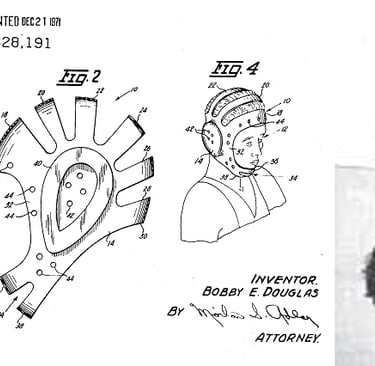
In June 1970, he filed U.S. Patent 3,628,191 for "Headgear for Wrestlers," granted on December 21, 1971. This design featured resilient padded ear guards with improved strapping for a secure, comfortable fit, building on earlier patents to enhance impact absorption and prevent cauliflower ear—a common, disfiguring injury he had witnessed and likely experienced firsthand.
Why did he create it? As a wrestler who competed at the highest levels and a coach seeing young athletes suffer repetitive head and ear trauma, Douglas sought to refine existing gear for better protection without hindering performance. His headgear emphasized safety, adjustability, and minimal bulk, making it more practical for intense training and matches. Though not commercially produced on a large scale (unlike Cliff Keen's designs), the patent served as prior art for future innovations and reflected Douglas' proactive approach to athlete welfare—stemming from his own Olympic grind and coaching observations.
Honors, Legacy, and Final Years
Douglas' trailblazing achievements earned him induction into the National Wrestling Hall of Fame as a Distinguished Member in 1987, along with honors like the Black Coaches Association Lifetime Achievement Award and the Oklahoma Sports Hall of Fame. He was the first African American to head a U.S. Olympic wrestling team (2004) and received the NCAA's 75th Anniversary Award for his contributions.Retiring from coaching in 2006, Douglas continued advocating for the sport through clinics and writings until his passing on Feb 2026, at age 83. Survived by his family, he is remembered as a barrier-breaker who elevated wrestling's inclusivity and safety. Robert E. Douglas' life—from Olympic competitor to innovative coach—embodies perseverance, inspiring underrepresented athletes and ensuring the sport's evolution for all.
Check Us Out on Socials #ShotShield
Contact
shotshieldgear@gmail.com
© 2026. All rights reserved.
The ShotShield Cushion Insert product line is a supplemental foam padding accessory designed for use with approved wrestling headgear. It is intended only to provide additional soft cushioning for comfort.ShotShield is not designed, intended, or proven to prevent, mitigate, or reduce the risk of concussions, traumatic brain injuries, or any head, brain, neck, or other injuries.
No headgear or accessory can eliminate the risk of concussion or serious injury in wrestling.Concussions and other injuries may still occur even when additional padding is used. ShotShield products are designed solely as a supplemental comfort accessory for use with NFHS- and NCAA-approved headgear. Referees have final discretion on all equipment.Wrestling carries inherent risks of injury.
Always use proper technique, strengthen the neck, follow NFHS/NCAA rules, and seek immediate medical care for any suspected head impact. By using this site and/or purchasing ShotShield products, you accept these terms. Consult coaches, referees, and medical professionals for equipment and safety guidance.
ShotShield Safety Disclaimer:
(567) 2SHIELD
(567) 274-4353