Free Shipping on $50 Orders

Evolution through Innovation
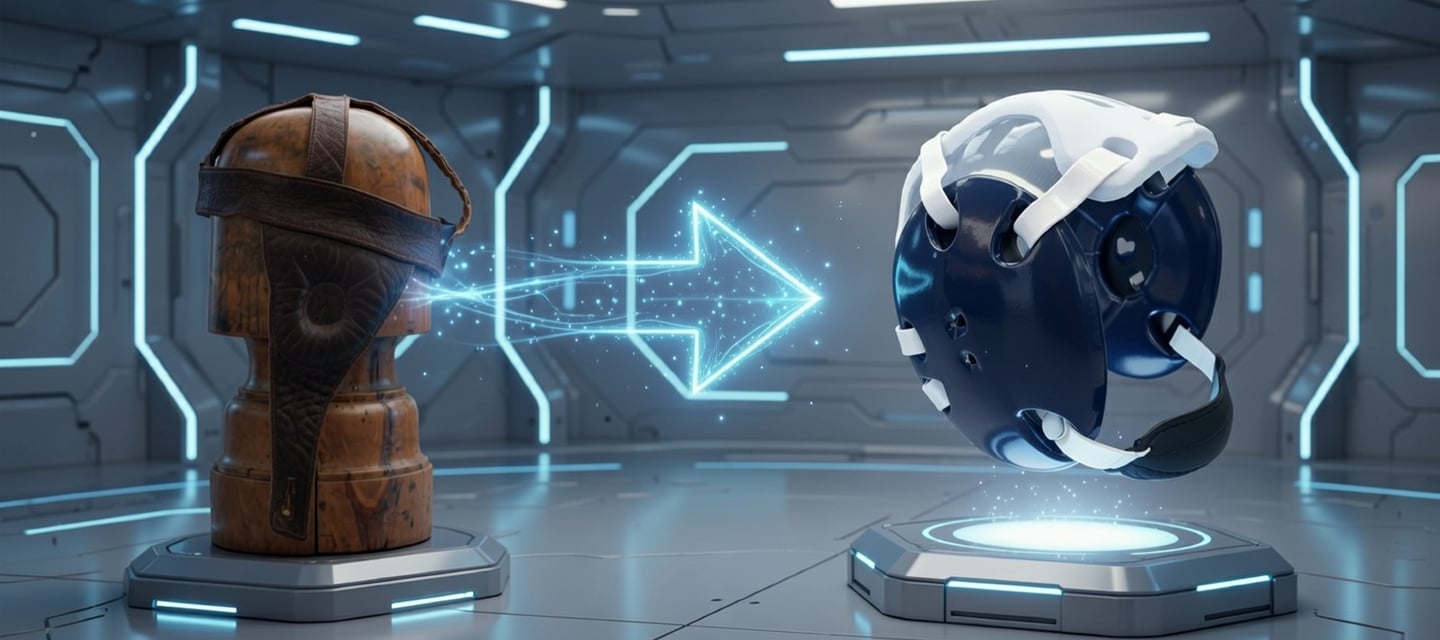
The evolution of wrestling headgear—designed primarily to prevent cauliflower ear (permanent ear deformation from repeated trauma)—represents a remarkable story of innovation driven by coaches, trainers, athletes, and engineers who witnessed the sport's physical toll firsthand. From makeshift solutions to high-tech helmets, these inventors transformed wrestling safety, making the sport more accessible while addressing everything from basic ear protection to concussion mitigation.
Pre-1950s: Makeshift Solutions and Early Attempts
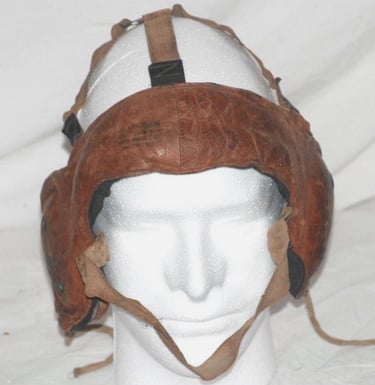
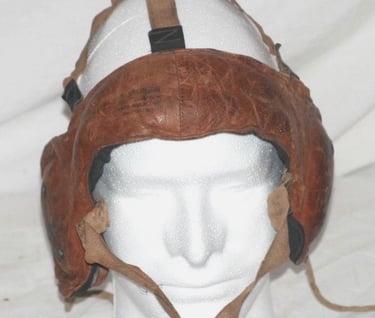
Before dedicated headgear, wrestlers relied on bandages, tape, or adapted leather caps from boxing/football. Cauliflower ear was rampant and often accepted as a badge of toughness.
1942: Raymond V. Roberts, longtime University of Michigan athletic trainer, patented the first wrestling-specific headgear (US 2,277,994 "Athletic Headgear"). Working alongside coach Cliff Keen, Roberts designed padded ear guards with resilient flanges—born from daily exposure to athlete injuries.
1950s–1960s: The Modern Foundation
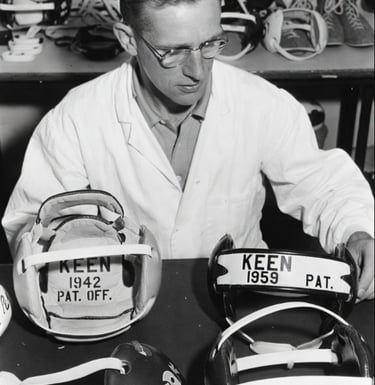
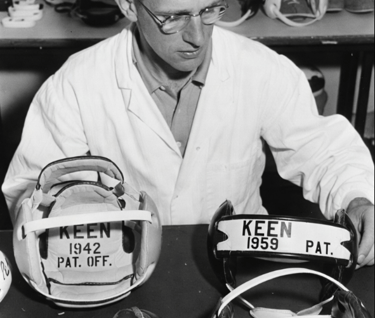
Mid-1950s: Cliff Keen, legendary Michigan coach and former undefeated wrestler, invented the first commercially successful headgear out of frustration with ear trauma on his teams.
1958–1959: Keen founded Cliff Keen Athletic and patented his iconic foam-padded, 4-strap design (US 2,898,596). Simultaneously, trainer Raymond V. Roberts refined his earlier work with a second patent (US 2,886,818).
1967: High school wrestler Michael S. Pukish Jr. patented recessed strap attachments (US 3,327,316), improving adjustability and fit.
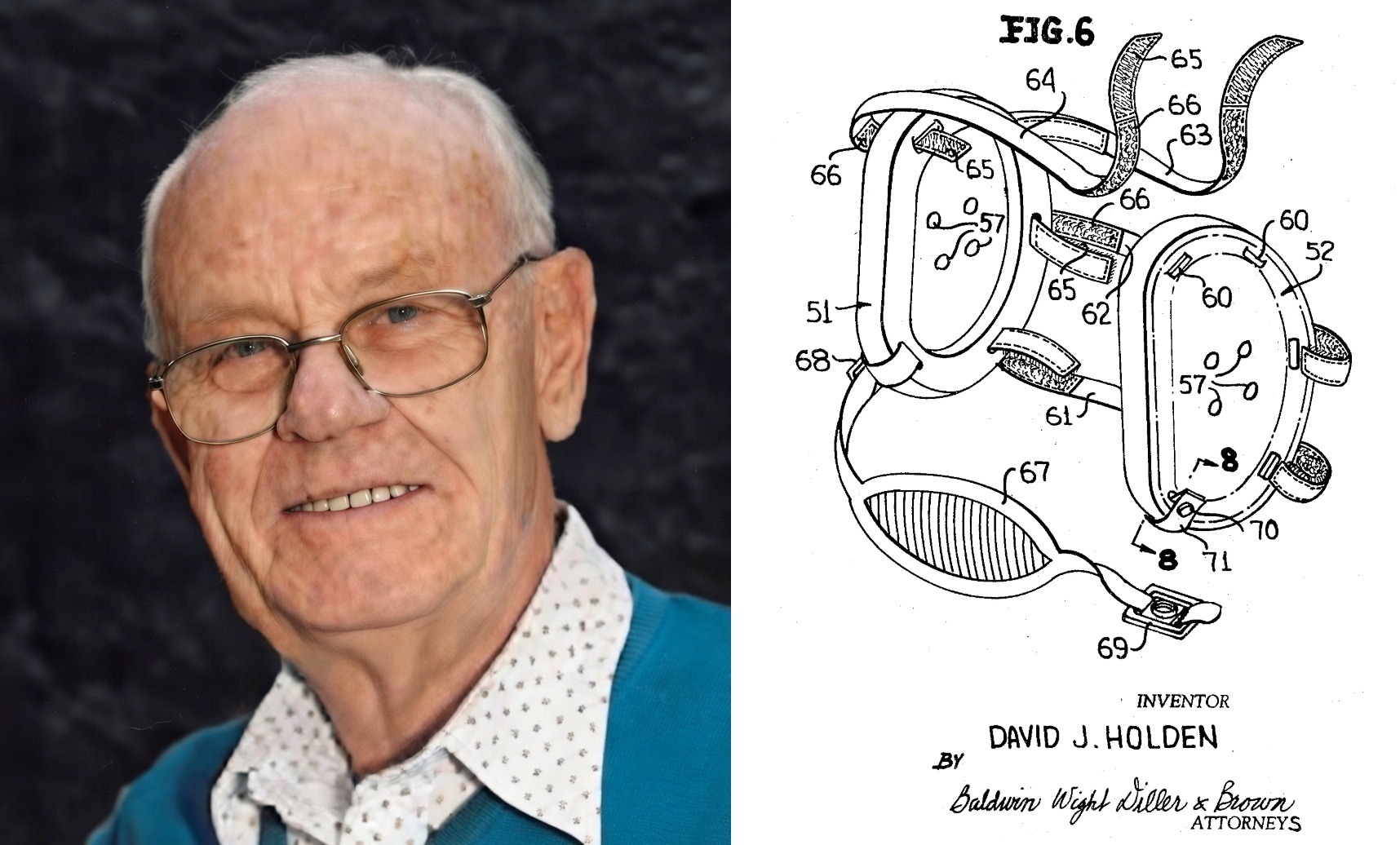
1970: Engineer David J. Holden introduced hook-and-loop (Velcro) straps (US 3,513,482)—a game-changing feature for quick, secure adjustments still used today.
Headgear became mandatory in U.S. high school (late 1960s/early 1970s) and college (around 1970–1972).1970s–1990s: Refinements and Training Focus
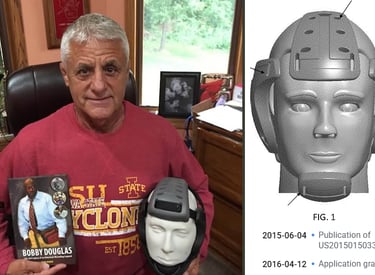
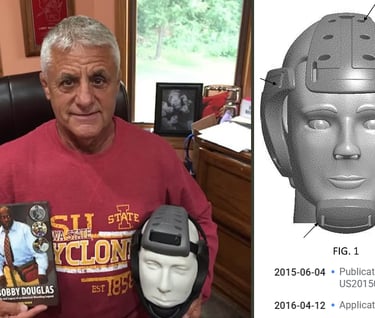
1971: Two-time Olympian Bobby Douglas patented improved padding and fit (US 3,628,191), drawing from elite competition.
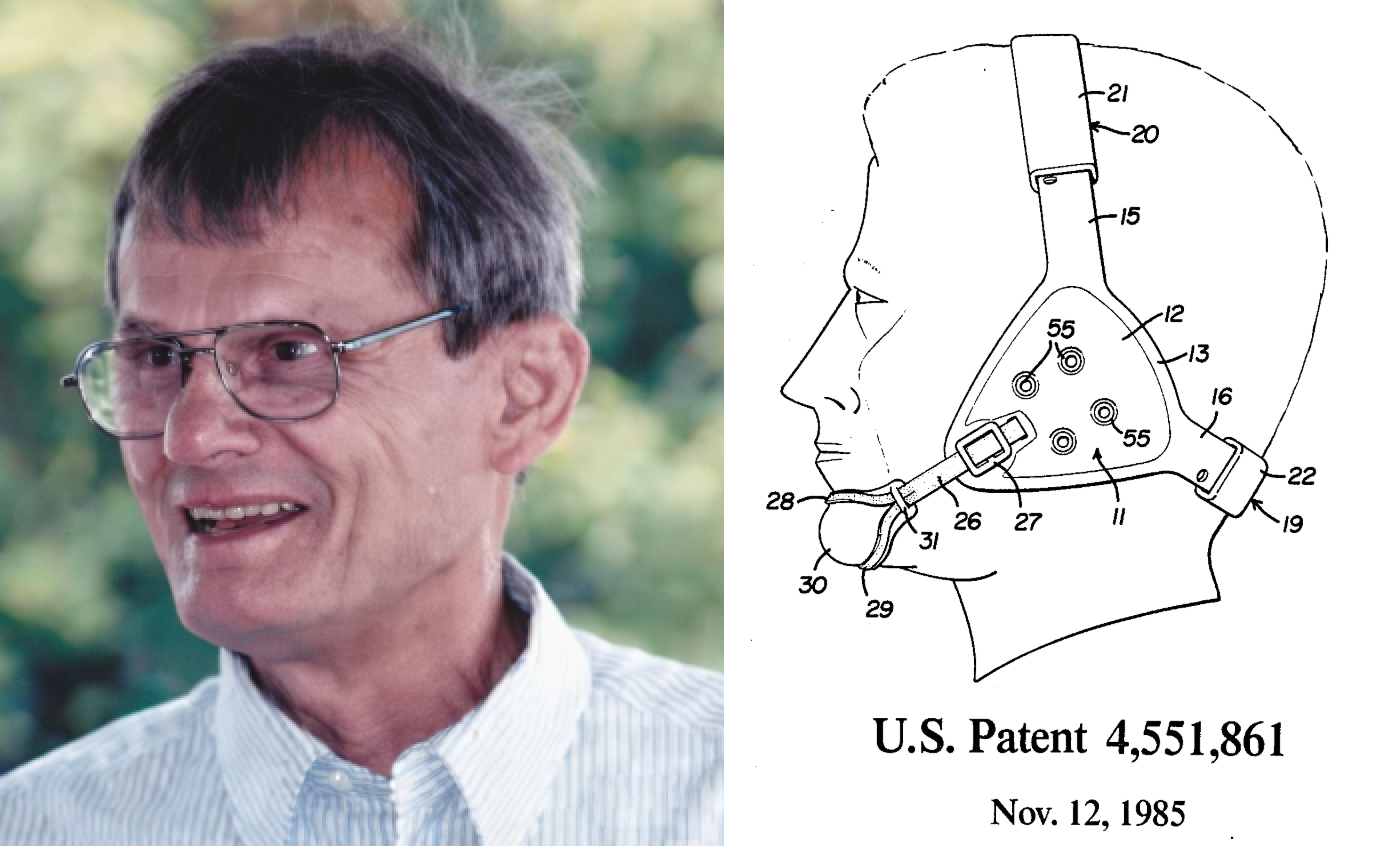
1985: Designer John L. Marchello (Danmar Products) created removable ear pads with air chambers for better shock absorption and hearing (US 4,551,861).
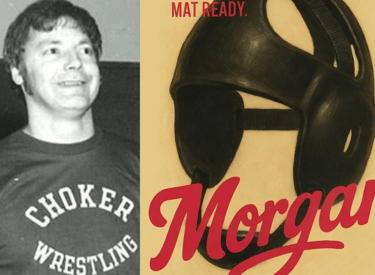
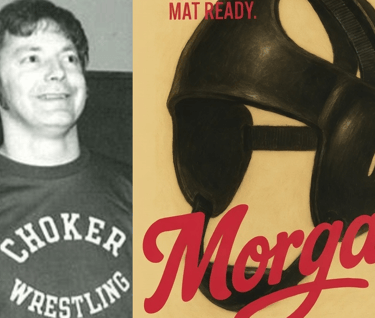
1990s: The Morgan Gladiator (Suplay exclusive) added thick foam and forehead protection for training/neck strengthening—prioritizing comprehensive impact safety.
2000s–2010s: Lightweight Evolution and Concussion Awareness
2000s: Jim Keen (Cliff's son) patented lightweight designs with enhanced straps (US6564395B2, US6782558B1), powering the F5 Tornado (43% lighter, NASA-inspired airflow) and Signature models.
Mid-2010s: Matman Dynasty refined ultra-soft fabric-covered foam for low-friction grappling.
1996 onward: Coach Larry Marchionda, with co-inventors Dale Evans (former champion wrestler) and Rich Andrews (former NFL kicker), founded LDR Headgear. Their patented ConTek foam (US10182607B2) extended protection to temples/forehead—independently tested as superior for concussion reduction.
2010s–Present: High-Tech Revolution
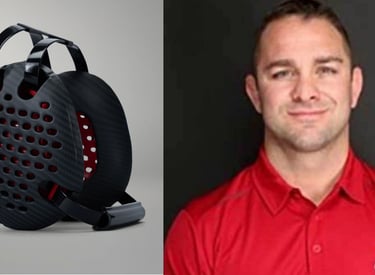
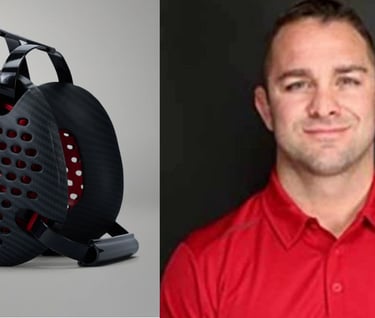
2016 onward: Former NCAA wrestler Mario R. Mercado Jr. founded BATS-TOI and launched the Mercado series (multiple versions: Original, III, V, M5). Using AI/computational design, 3D printing, and impact sensors, it became the first full-head helmet certified for wrestling (official NFHS partner 2022–present).
Today, headgear remains mandatory in U.S. folkstyle (high school/NCAA) but optional in international freestyle/Greco-Roman. From Roberts and Keen's foundational work to Mercado's smart helmets, these inventors—many wrestlers or coaches themselves—turned personal experience into lasting protection, ensuring athletes compete fiercely while safeguarding their health. ShotShield continues this tradition, building on their legacy with cutting-edge solutions for tomorrow's wrestlers.
Check Us Out on Socials #ShotShield
Contact
shotshieldgear@gmail.com
© 2026. All rights reserved.
The ShotShield Cushion Insert product line is a supplemental foam padding accessory designed for use with approved wrestling headgear. It is intended only to provide additional soft cushioning for comfort.ShotShield is not designed, intended, or proven to prevent, mitigate, or reduce the risk of concussions, traumatic brain injuries, or any head, brain, neck, or other injuries.
No headgear or accessory can eliminate the risk of concussion or serious injury in wrestling.Concussions and other injuries may still occur even when additional padding is used. ShotShield products are designed solely as a supplemental comfort accessory for use with NFHS- and NCAA-approved headgear. Referees have final discretion on all equipment.Wrestling carries inherent risks of injury.
Always use proper technique, strengthen the neck, follow NFHS/NCAA rules, and seek immediate medical care for any suspected head impact. By using this site and/or purchasing ShotShield products, you accept these terms. Consult coaches, referees, and medical professionals for equipment and safety guidance.
ShotShield Safety Disclaimer:
(567) 2SHIELD
(567) 274-4353