Free Shipping on $50 Orders

David J. Holden
Brought Velcro to Wrestling Headgear
1/6/20262 min read
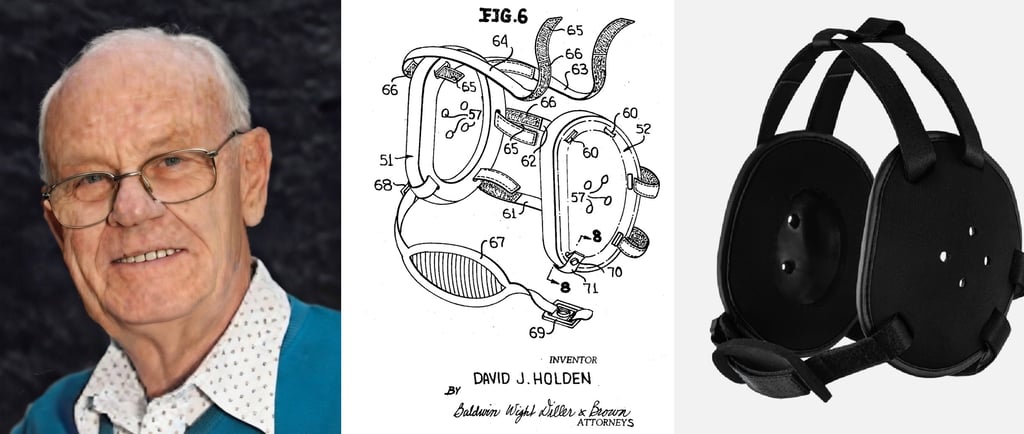
David J. Holden, an engineer based in Billerica, Massachusetts, during the late 1960s, made a lasting contribution to wrestling safety through his innovative design for protective headgear. Working within the George Frost Company—a prominent manufacturer of athletic equipment—Holden's practical engineering focused on solving real-world problems faced by wrestlers, resulting in a patent that introduced a key advancement still widely used today.
Professional Background and Role
Holden was part of the George Frost Company's product development team, specializing in athletic protective gear during an era when wrestling was rapidly adopting mandatory safety equipment. His work reflected a deep understanding of the sport's demands, prioritizing functionality, ease of use, and reliable performance in high-impact environments.
Innovation in Wrestling Headgear and Patents
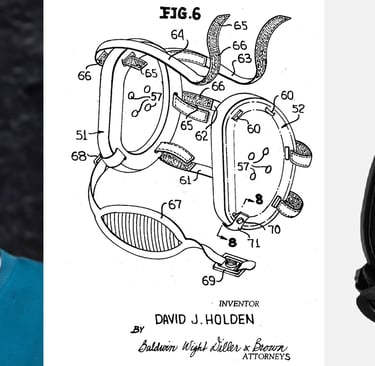
Holden's primary achievement was U.S. Patent 3,513,482 ("Wrestling Head Guard"), filed on August 22, 1968, and granted on May 26, 1970. Assigned to the George Frost Company, the design featured ear guards with layered resilient padding (including U-shaped elements for shock absorption) and adjustable straps for a secure fit.The primary and most influential improvement was the incorporation of hook-and-loop fasteners (Velcro) for the straps—a novel application at the time. This replaced traditional buckles or ties, allowing quick, customizable adjustments with a strong, reliable hold that minimized slippage during intense matches.
The Velcro system made the headgear easier to put on and adjust, improved comfort under pressure, and enhanced overall safety by ensuring consistent positioning. This innovation addressed common complaints with earlier models and has become a standard feature in many modern wrestling headgear designs, from entry-level to elite competition models.The patent built on 1950s foundational work (e.g., Cliff Keen) while introducing modern fastening technology, influencing subsequent gear by prioritizing durability and user-friendliness.
Legacy
Though not widely known outside industry circles, Holden's 1970 patent played a pivotal role during wrestling's transition to mandatory protective equipment in the 1970s. His introduction of hook-and-loop straps revolutionized adjustability and security, making headgear more practical and effective—a feature that remains essential in today's models. David J. Holden's work exemplifies targeted engineering that directly improved athlete safety and performance, leaving a quiet but enduring mark on the sport.
Check Us Out on Socials #ShotShield
Contact
shotshieldgear@gmail.com
© 2026. All rights reserved.
The ShotShield Cushion Insert product line is a supplemental foam padding accessory designed for use with approved wrestling headgear. It is intended only to provide additional soft cushioning for comfort.ShotShield is not designed, intended, or proven to prevent, mitigate, or reduce the risk of concussions, traumatic brain injuries, or any head, brain, neck, or other injuries.
No headgear or accessory can eliminate the risk of concussion or serious injury in wrestling.Concussions and other injuries may still occur even when additional padding is used. ShotShield products are designed solely as a supplemental comfort accessory for use with NFHS- and NCAA-approved headgear. Referees have final discretion on all equipment.Wrestling carries inherent risks of injury.
Always use proper technique, strengthen the neck, follow NFHS/NCAA rules, and seek immediate medical care for any suspected head impact. By using this site and/or purchasing ShotShield products, you accept these terms. Consult coaches, referees, and medical professionals for equipment and safety guidance.
ShotShield Safety Disclaimer:
(567) 2SHIELD
(567) 274-4353